
NEW DELHI: Republicans and Democrats are making their final appeals to American voters ahead of Tuesday's crucial midterm elections, with control of Congress hanging in the balance and an unexpected political endorsement in Michigan adding fresh uncertainty to an already closely watched Senate contest.
The final stretch of campaigning has been marked by competing narratives over the economy, the Trump administration's record, healthcare and immigration, while divisions within the Democratic Party have come into sharp focus following Michigan Congresswoman Haley Stevens' decision to endorse Republican Senate candidate Mike Rogers.
The endorsement has disrupted Democratic efforts to present a united front in Michigan, a state considered important to the party's efforts to regain control of the Senate.
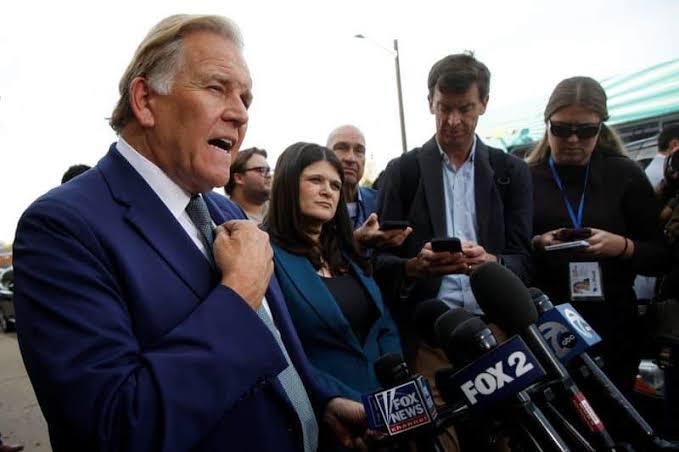
Stevens, who lost the Democratic Senate primary to Abdul El-Sayed in August, appeared alongside Rogers at a Detroit church service before publicly announcing her support for the Republican candidate.
The move was particularly striking because Stevens had previously indicated that she would support her party's nominee in the general election.
In a video announcing her decision, Stevens said El-Sayed had made clear that she was no longer welcome in his campaign and that she should stay away. She subsequently declared her support for Rogers, saying she could not be part of El-Sayed's campaign.
The endorsement followed weeks of disagreements between the two Democrats over the campaign's messaging, particularly El-Sayed's criticism of US support for Israel and his response to an advertisement by an outside political group that Stevens described as antisemitic.
The endorsement triggered a strong reaction from Democratic leaders, who accused Stevens of undermining party unity at a critical moment.
Senate Minority Leader Chuck Schumer condemned her decision, describing it as a betrayal and reaffirming the party's support for El-Sayed.
Other Democratic officials also urged voters to remain focused on the broader electoral contest rather than the dispute between the two former primary rivals.
Michigan Representative Debbie Dingell described the episode as a distraction from issues affecting voters, including the cost of living and economic pressures.
El-Sayed, meanwhile, sought to play down the controversy, saying his attention remained on the concerns of Michigan residents, including rising grocery and fuel costs and environmental issues.
His campaign said it raised $1.2 million in the four hours following Stevens' endorsement, making it one of its strongest fundraising periods since the August primary.
The development highlighted the continuing divisions within the Democratic Party over Israel, political messaging and the direction of the party, even as its national leadership seeks to consolidate support behind its candidates.
Republicans have sought to use the controversy to question Democratic unity and raise concerns about El-Sayed's political positions.
Rogers welcomed Stevens' endorsement, framing it as support for his argument that the Michigan race is about confronting what he described as divisive political rhetoric.
President Donald Trump also praised Stevens for crossing party lines, presenting her decision as a demonstration of political loyalty to Michigan.
The Republican candidate has sought to connect El-Sayed with the Democratic Party's progressive wing, while El-Sayed's supporters have accused Republicans of using inflammatory rhetoric and personal attacks to undermine his candidacy.
El-Sayed, an Egyptian-American Muslim, has faced criticism and attacks from political opponents over his positions on Israel and his associations with controversial political commentators. He has rejected allegations questioning his loyalty to the United States.
The controversy has added a national dimension to the Michigan contest, placing issues of religion, identity, foreign policy and political divisions alongside traditional domestic concerns.
Beyond the Michigan dispute, the economy continues to dominate the closing arguments of both parties.
Democrats are seeking to make affordability, healthcare costs and the impact of the Trump administration's economic policies central themes of their campaigns. They argue that voters need greater relief from the rising cost of everyday necessities.
Republicans, meanwhile, are defending the administration's economic agenda and emphasising its positions on border security, national security and other policy priorities.
Economic dissatisfaction has emerged as a significant challenge for the administration, with recent polling indicating that many Americans remain concerned about inflation and the cost of living despite continued economic expansion.
The debate reflects a broader disconnect between headline economic indicators and the financial pressures experienced by households.
Both parties are attempting to convince undecided voters that their candidates are better positioned to address these concerns, making economic policy a major feature of the final campaign appearances.
The final campaign days have also brought developments in Alaska, where a legal dispute over the Senate election has attracted national attention.
A federal judge dismissed a Justice Department lawsuit seeking to prevent Alaska officials from certifying election results if Republican Senator Dan Sullivan narrowly loses.
The administration had argued that voters could be confused by the presence of another candidate with a similar name on the ballot.
Democratic candidate Mary Peltola and the other individuals involved have disputed allegations of improper coordination surrounding the candidacy of Daniel J. Sullivan Jr.
The legal challenge has added another layer of political tension to a midterm election cycle in which control of the Senate could be determined by a small number of competitive races.
The mid-term elections will determine the composition of the next Congress, with all 435 seats in the House of Representatives and 35 of the Senate's 100 seats being contested. Gubernatorial elections are also taking place in several states.
For Trump, the midterms represent an important test of public confidence in his administration and its legislative agenda. For Democrats, the elections offer an opportunity to challenge Republican control of Congress and strengthen their influence over national policymaking.
The Michigan Senate race has become a particularly visible example of the competing pressures facing Democrats: maintaining party unity, addressing disagreements over foreign policy and ensuring that economic concerns remain at the centre of their campaign.
As candidates make their final appeals, the election is shaping up as a broader assessment of the country's political direction, with economic anxieties, partisan divisions and questions about political leadership all influencing the debate.
Ultimately, the outcome will determine not only the balance of power in Washington but also the political environment in which the Trump administration will have to pursue its remaining legislative priorities.