
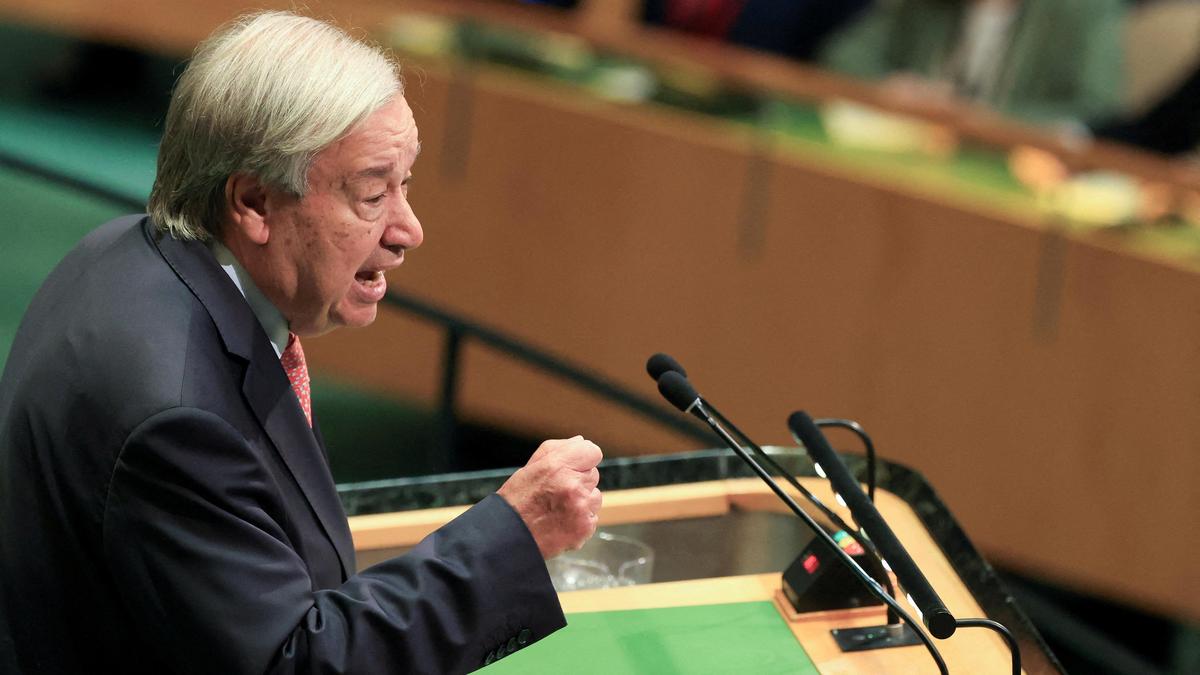
NEW DELHI: : The United Nations is facing renewed calls for institutional and bureaucratic reforms as the organisation prepares for a leadership transition at the end of this year, with candidates for the next Secretary-General highlighting the need to improve efficiency, strengthen accountability and restore confidence in multilateral institutions.
Rebeca Grynspan, former Costa Rican vice-president and a leading contender to succeed current Secretary-General António Guterres, has called for a more proactive United Nations, arguing that the organisation has become too risk-averse and needs to take greater diplomatic initiatives to address international conflicts.
Speaking ahead of the United Nations Security Council's selection process, Grynspan stressed that reducing expenditure alone would not address the organisation's structural challenges. She called for reforms aimed at eliminating overlapping responsibilities, streamlining administrative structures and improving the implementation of mandates given to different UN agencies.
Grynspan, who previously headed the UN Conference on Trade and Development (UNCTAD), cited her experience in restructuring the organisation, including a reduction of around 20 per cent in positions. She argued that consolidating functions and improving coordination could help the UN make better use of its resources while strengthening its operational effectiveness.
The proposed reforms come at a time when the United Nations is facing financial constraints, growing geopolitical divisions and criticism over its ability to respond effectively to conflicts and humanitarian emergencies. The organisation's role in addressing the wars in Ukraine and the Middle East has also intensified discussions about the effectiveness of its diplomatic and peacekeeping mechanisms.
The UN80 initiative, launched to modernise the organisation and improve its functioning, has brought renewed attention to administrative restructuring, budget management, technology adoption and coordination among UN agencies. The reform agenda also seeks to reduce duplication of work and ensure that resources are directed towards priority areas.
Another important area under examination is recruitment and human resource management across the UN system. A recent review by the organisation's Joint Inspection Unit has examined recruitment policies and practices, including the use of artificial intelligence in recruitment and the associated risks and challenges. The findings are part of broader efforts to strengthen transparency, accountability and efficiency in the international civil service.
The debate also extends to the compensation and benefits of UN employees. The International Civil Service Commission's comprehensive review of the compensation package has brought the issue of salaries, allowances and workforce management into focus, particularly as member states seek greater financial discipline.
Grynspan has also advocated stronger diplomatic engagement, conflict prevention and mediation, arguing that the United Nations should take a more active role in resolving disputes rather than limiting its response to managing crises after they emerge.
The next Secretary-General will face the challenge of leading an organisation operating across nearly 1,000 duty stations and multiple specialised agencies, while balancing the expectations of member states with the need to maintain an independent and effective international civil service.
Guterres, who has served two five-year terms, is scheduled to leave office on December 31, 2026. The selection of his successor requires a recommendation from the Security Council followed by appointment by the General Assembly.
As the leadership race progresses, institutional reform, financial sustainability and the future role of the international civil service are emerging as key issues in determining the direction of the United Nations in the coming years.