
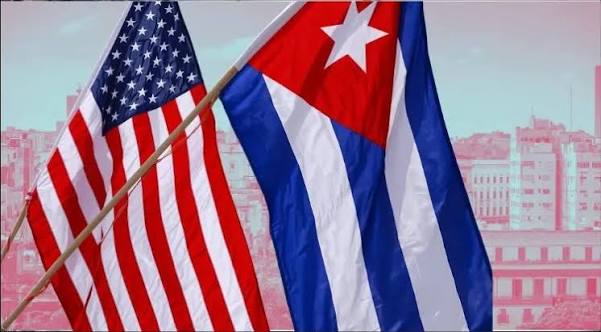
NEW DELHI: The United States has announced fresh economic sanctions targeting Cuba's electronics, manufacturing, maritime and technology sectors, marking a further escalation in Washington's campaign to increase economic pressure on Havana. The measures, announced on November 5, 2026, are aimed at restricting the Cuban government's access to international financial networks, industrial supplies and foreign commercial partnerships.
The US Treasury Department's Office of Foreign Assets Control (OFAC) issued a determination authorising sanctions against foreign individuals and entities operating in or having operated in the targeted sectors of the Cuban economy. The decision broadens Washington's existing sanctions framework and increases the risk of penalties for overseas businesses involved in certain commercial activities connected with Cuba.
Alongside the expanded sectoral restrictions, the US State Department announced sanctions against eight entities and two individuals and identified five petroleum tankers as blocked property. The targets include organisations associated with Cuba's oil shipping networks, state-owned import and technical-support companies, and Chinese suppliers accused of providing military-related equipment and technological assistance to the Cuban armed forces.
US Secretary of State Marco Rubio defended the measures, alleging that Cuba's leadership was diverting the country's energy, shipping and technology resources to benefit military-linked elites while ordinary citizens continued to face electricity shortages, fuel scarcity and economic difficulties. Washington also accused Cuban authorities of relying on offshore commercial networks and foreign suppliers to support the country's military and security infrastructure.
Among the entities targeted are China National Electronic Import and Export Company and Beijing H&C Technologies, which Washington accused of supplying equipment and components linked to Cuba's military capabilities. The measures also cover Cuban state-owned organisations involved in electronics imports and technical services.
The expanded sanctions carry potential implications for foreign companies and financial institutions doing business with Cuba. Under the US sanctions framework, foreign individuals and organisations operating in the designated sectors or engaging in certain transactions with sanctioned entities could face restrictions or penalties. The development is expected to increase compliance challenges for international businesses, particularly those involved in shipping, electronics, technology and industrial manufacturing.
Cuba has strongly criticised Washington's latest actions. Foreign Minister Bruno Rodríguez accused the United States of intensifying its economic blockade and imposing additional restrictions that would further affect the country's already strained economy. Havana has repeatedly argued that US sanctions contribute to shortages of essential goods, energy supply disruptions and difficulties in accessing international markets.
The latest measures come amid deteriorating US-Cuba relations, with the Trump administration continuing to press Havana over its political system, military partnerships and international relationships. The sanctions also reflect Washington's broader approach of using financial and trade restrictions to limit the economic and strategic activities of governments it considers a threat to US national security.
The move is likely to further complicate Cuba's efforts to attract foreign investment, secure industrial supplies and strengthen its technology and manufacturing capabilities, while adding another point of tension to relations between the United States, Cuba and China.