
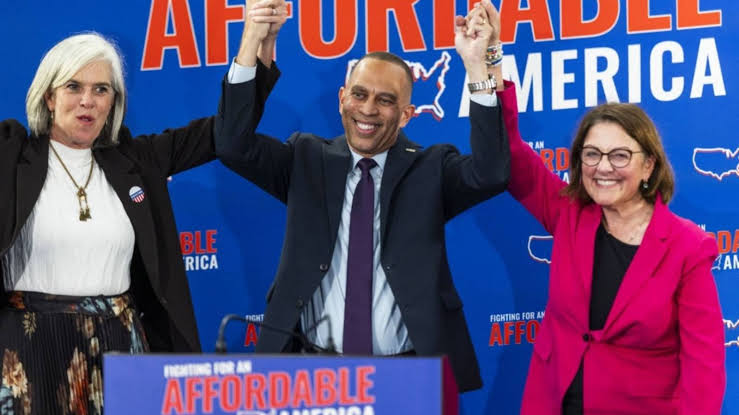
NEW DELHI: The Democratic Party has secured control of both the US House of Representatives and the Senate in the November 3 midterm elections, delivering a major political setback to President Donald Trump and his Republican Party. The results mark a significant shift in the balance of power in Washington and are expected to reshape the political landscape during the remaining two years of Trump's second presidential term.
The election outcome reflects growing voter dissatisfaction over the cost of living, inflation, the US military conflict with Iran, immigration policies and concerns about government corruption. Democrats made significant gains in traditionally Republican strongholds, defeating several Republican incumbents and candidates backed by Trump. The results have also raised questions about the future direction of the Republican Party and its political strategy ahead of the 2028 presidential election.
According to results reported by The Associated Press, Democrats crossed the required threshold of 218 seats in the House of Representatives and secured a majority in the 100-member Senate. The victories mark a dramatic reversal from the previous congressional balance, when Republicans controlled both chambers and largely supported the administration's legislative agenda.
One of the most notable aspects of the election was the Democrats' performance in states that had traditionally supported Republican candidates. The party registered victories in Kansas, Texas, South Carolina, Iowa, Ohio and other competitive states, demonstrating a broader shift in voter preferences across several regions.
In Texas, Democrats secured a Senate victory and defeated three-term Republican Governor Greg Abbott, while also making significant gains in other statewide contests. In South Carolina, the party defeated a Trump-backed Senate candidate, while Kansas elected its first Democratic senator in nearly a century. The victories in traditionally Republican territory added to the scale of the Democratic gains.
The results also brought several historic political milestones. Democrat Keisha Lance Bottoms became the first Black woman elected governor of a US state, winning in Georgia. In Texas, Gina Hinojosa is set to become the state's first Latina governor. Florida elected Byron Donalds as its first Black Republican governor, while Peggy Flanagan won a Senate seat in Minnesota, becoming the first Native American woman elected to the chamber.
Democrats also strengthened their position in the House, winning a series of closely contested districts and making gains in areas that had supported Trump in the 2024 presidential election. Party leaders have indicated that the new congressional majority will focus on government accountability, economic affordability and greater oversight of the administration.
Economic concerns dominate voter sentiment
The economy emerged as one of the most important issues influencing voter behaviour. Rising household expenses, persistent inflation and concerns over employment and purchasing power featured prominently during the election campaign.
According to exit polls conducted by SSRS for a consortium of US media organisations, nearly nine in 10 voters considered the cost of living a crucial or major factor in their voting decisions. A substantial proportion of respondents also expressed dissatisfaction with the country's economic direction and said they were facing greater financial pressure than when Trump entered the White House in January 2025.
The administration's tariff policies and the military conflict with Iran became major campaign issues. Democrats argued that higher import costs and geopolitical instability had contributed to economic uncertainty and increased expenses for American households. Republicans, meanwhile, defended the administration's economic and national security policies, arguing that its measures were intended to strengthen American industry and protect national interests.
Government corruption and the exercise of presidential powers were also prominent concerns. Exit polls indicated that around 70 per cent of voters wanted Congress to exercise stronger checks and balances on the president. The findings suggested that voters were looking beyond individual policy questions to the broader functioning of government institutions.
Democrats prepare for greater oversight of Trump administration
The change in congressional control is expected to have significant implications for Trump's domestic and foreign policy agenda. With Democrats controlling both chambers, the administration will face greater scrutiny over executive decisions, government spending, immigration enforcement, trade policies and military operations abroad.
The new Democratic majority is expected to use congressional committees to investigate the administration's policies and activities. Lawmakers could summon senior officials, seek government records, conduct public hearings and issue subpoenas as part of their oversight responsibilities.
The Democratic-controlled Senate will also have the authority to scrutinise presidential nominations and block appointments requiring Senate confirmation. This could affect appointments to senior government positions, diplomatic posts and federal judicial positions, including any future vacancies on the US Supreme Court.
On the legislative front, the administration could encounter difficulties in securing approval for major policy proposals, particularly those involving taxation, federal spending, immigration and trade. Although Trump retains his presidential veto powers, disagreements between the White House and Congress could lead to prolonged negotiations and legislative deadlock.
Democratic leaders have indicated that affordability, healthcare, government accountability and the protection of institutional checks and balances will be among their priorities. Hakeem Jeffries is positioned to become the first Black Speaker of the House if selected by the incoming Democratic majority.
Trump acknowledges results but signals resistance
President Donald Trump acknowledged the Democratic victories and congratulated the opposition following the announcement of the results. However, he rejected the interpretation that the outcome represented a personal rejection of his presidency and attributed the Republican losses partly to the performance of individual candidates.
Trump also indicated that he would be willing to work with Democrats on certain issues, including immigration, while warning that he would veto legislation he considered unacceptable.
The results mark a significant political development for a president who had made himself central to the Republican campaign. During the final weeks before voting, Trump addressed numerous rallies and urged supporters to treat the midterm contests as a direct assessment of his administration.
Republican leaders now face the challenge of reassessing their campaign strategy, rebuilding support among independent voters and responding to the Democrats' gains in states that have traditionally favoured