
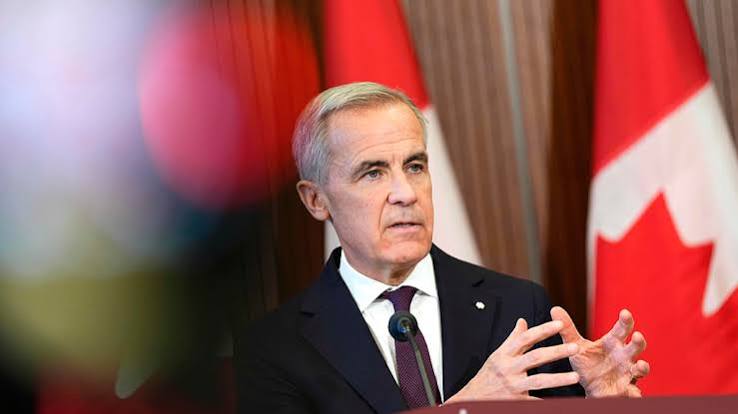
NEW DELHI: Canadian Prime Minister Mark Carney has unveiled a comprehensive national security strategy aimed at strengthening the country's economic sovereignty, protecting critical industries and improving its ability to respond to emerging global threats.
Titled The Plan for a Stronger Canada, the strategy was launched on October 29, 2026, marking Canada's first comprehensive national security strategy in more than 20 years. It seeks to build a more resilient economy, strengthen domestic institutions and enhance the country's strategic independence amid growing geopolitical tensions, economic uncertainty and evolving security challenges.
The strategy identifies eight critical sectors that will form the foundation of Canada's long-term economic and national security priorities. These include emerging technologies, critical minerals, defence, energy, transportation, pharmaceuticals and biotechnology, food security, and payments, settlements and investment systems.
The government said strengthening these sectors would help reduce vulnerabilities arising from international supply chain disruptions, foreign interference and economic pressures. It also plans to increase domestic industrial capacity, secure essential resources and promote Canadian innovation to improve the country's competitiveness in global markets.
The strategy is built around five major priorities: economic security, foreign policy, defence, public safety and intelligence. Under the economic security framework, the government plans to strengthen strategic industries, expand domestic manufacturing, improve supply chain resilience and secure access to essential medicines, advanced technologies and critical resources.
On foreign policy, Canada intends to diversify its international partnerships and trade relationships to reduce excessive dependence on individual countries. The government will also strengthen cooperation with like-minded nations, particularly in areas such as critical minerals, advanced technology, energy security and defence production.
Defence modernisation is another major component of the strategy. The government plans to strengthen the Canadian Armed Forces, accelerate military procurement and develop a stronger domestic defence industrial base. It will also prioritise Arctic security and reinforce Canada's commitments to the North American Aerospace Defense Command (NORAD) and the North Atlantic Treaty Organization (NATO).
The strategy further identifies foreign interference, espionage, cybercrime, violent extremism and transnational organised crime as major threats to national security. To address these challenges, the government plans to strengthen border security, improve intelligence-sharing and enhance the protection of critical infrastructure and democratic institutions.
Canada will also modernise its intelligence capabilities by investing in advanced technologies, including artificial intelligence and secure digital infrastructure. The proposed measures are intended to improve intelligence collection, analysis and information-sharing while ensuring that individual rights and freedoms remain protected.
As part of the implementation process, Carney will convene a meeting of federal, provincial and territorial leaders to improve coordination on national security matters. The government has also committed to bringing forward proposals to modernise national security legislation within the first year of the strategy.
The strategy will be updated at least once every four years to reflect changing international conditions and emerging security challenges.
The announcement reflects Canada's growing focus on economic sovereignty as an essential element of national security. With global competition over technology, critical minerals, energy resources and supply chains intensifying, the government is seeking to strengthen domestic capabilities while maintaining international partnerships and its role as a reliable global ally.