
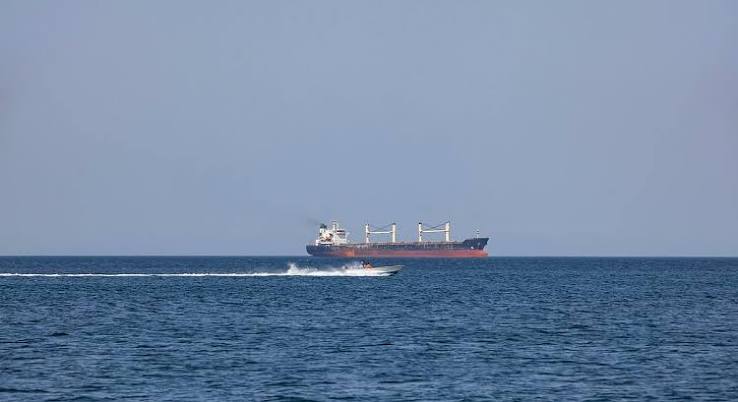
NEW DELHI: The escalating crisis in the Strait of Hormuz has emerged as one of the biggest threats to global energy security, raising concerns over oil supplies, international shipping, inflation and geopolitical stability. The strategic waterway, which connects the Persian Gulf with the Gulf of Oman and the Arabian Sea, is a critical route for international energy trade. Any prolonged disruption could have consequences extending far beyond the Middle East, affecting major economies across Asia, Europe and other regions.
The latest reports of attacks on oil tankers and growing military tensions involving Iran and the United States have intensified concerns over the safety of commercial shipping. Iran's Revolutionary Guards have reportedly said that two oil tankers struck naval mines while attempting to cross the strait, setting both vessels on fire and sinking one. The reported incidents have heightened fears among shipping companies, energy traders and governments about the risks of navigating the waterway.
The crisis is particularly significant because the Strait of Hormuz is not simply a regional shipping passage. It is one of the world's most important energy chokepoints, through which a substantial proportion of internationally traded crude oil and liquefied natural gas passes. A disruption to this route could affect fuel availability, transportation costs and industrial production in countries heavily dependent on energy imports.
The importance of the Strait of Hormuz lies in its geographical position and the limited alternatives available to energy-exporting countries in the Persian Gulf. It is bordered by Iran to the north and Oman and the United Arab Emirates to the south. The narrow passage connects major oil-producing countries, including Saudi Arabia, Iraq, Kuwait, Qatar and the UAE, with international markets.
According to a Congressional Research Service report, approximately 25 per cent of the world's maritime trade in crude oil and petroleum products and around 19 per cent of global liquefied natural gas (LNG) trade passed through the strait in 2025. This makes the waterway particularly important for countries in Asia, which account for a substantial share of energy imports from the Gulf region.
The potential consequences of a prolonged disruption are therefore significant. Oil-producing countries could face difficulties exporting crude, while importing nations would have to compete for supplies from alternative sources. Such a situation could increase transportation costs, push up energy prices and create uncertainty in international commodity markets.
The security situation has deteriorated amid the wider confrontation between Iran and the United States. Tehran has sought to exercise greater control over shipping movements through the strait, warning vessels against using routes that it considers unauthorised. The United States, meanwhile, has taken steps to protect commercial shipping and maintain access to the waterway.
Recent reports of tanker attacks have further complicated the situation. Iran's Revolutionary Guards claimed that two tankers struck naval mines in the southern corridor of the strait, resulting in explosions and fires. Iranian authorities also claimed that one supertanker carrying more than two million barrels of crude oil sank. However, the claims have not been independently verified. Maritime monitoring authorities have separately reported an attack on a tanker approaching the strait, with its crew reported safe.
The increasing frequency of maritime incidents has raised concerns about the safety of commercial vessels, particularly those transporting crude oil and petroleum products. Shipping companies may be forced to reconsider routes, delay voyages or suspend operations until security conditions improve.
Higher insurance premiums, additional security arrangements and longer shipping schedules could also increase the cost of transporting energy supplies. Even without a complete closure of the waterway, uncertainty over safe passage could have a considerable impact on international trade.
The crisis presents a complicated situation for international energy markets. Although tensions in the Strait of Hormuz have raised concerns about supply disruptions, oil prices have not moved in a single direction.
On Monday, November 16, international oil prices declined amid expectations of a global supply surplus. Brent crude fell 0.6 per cent to approximately $95.30 per barrel, while US West Texas Intermediate (WTI) declined 0.3 per cent to around $88.34 per barrel.
The International Energy Agency has forecast global oil supply averaging 105 million barrels per day, approximately 1.7 million barrels per day above projected demand. Expectations of additional supplies, combined with weaker Chinese refining activity, have contributed to downward pressure on prices.
However, continuing security risks in the Strait of Hormuz and higher shipping costs remain important factors supporting the market.
This indicates that the global oil market is balancing two competing forces: expectations of sufficient supply and the possibility of sudden disruptions caused by geopolitical developments. A further escalation could quickly change market expectations, even if the overall global supply position remains relatively comfortable.
Asian economies are particularly vulnerable to instability in the Strait of Hormuz because of their dependence on energy imports from the Middle East. China, India, Japan and South Korea are among the major economies with significant exposure to Gulf energy supplies.
For India, the situation is especially important because crude oil imports play a major role in meeting domestic energy requirements. Any prolonged disruption could increase the cost of imported crude, raise freight and insurance expenses and place additional pressure on the country's import bill.
Higher international crude prices could also affect domestic fuel pricing, transportation costs, manufacturing expenses and inflation. Industries dependent on petroleum-based products, including aviation, chemicals, fertilisers and logistics, could face higher operating costs.
The impact would not necessarily be limited to crude oil. Disruptions to LNG shipments could also affect countries dependent on imported natural gas for electricity generation, industrial production and household consumption.
For countries such as Japan and South Korea, which have limited domestic energy resources, securing alternative supplies could become increasingly important if instability continues.
The crisis has also increased the strategic importance of the US military presence in the Gulf region. Washington has sought to protect shipping routes and prevent Iran from exercising unrestricted control over the Strait of Hormuz.
The arrival of the USS Theodore Roosevelt in the Middle East on November 16 has taken the US naval presence in the region to three aircraft carriers, according to US officials cited by Al Jazeera and CBS News. The deployment comes amid renewed military tensions and Iranian warnings that it may not wait for another US attack before responding.
The expanded military presence could strengthen deterrence and provide additional security capabilities. However, it also increases the possibility of further confrontation if military forces from opposing sides come into direct contact.
Regional countries are consequently facing a difficult diplomatic and security challenge. While Gulf states have an interest in protecting their energy infrastructure and maritime trade, they also have strong economic reasons to avoid a wider regional conflict.
One of the biggest challenges arising from a prolonged Hormuz disruption is the limited capacity of alternative export routes.
Saudi Arabia's East-West pipeline provides an alternative route for transporting crude oil towards the Red Sea, while the UAE has pipeline infrastructure connecting some of its oil production to the port of Fujairah outside the Strait of Hormuz.
However, these routes cannot necessarily accommodate all the volumes normally transported through the waterway. Their capacity, operational conditions and access to export terminals also limit their ability to compensate for a prolonged disruption.
Energy-importing countries may therefore have to increase purchases from suppliers outside the Gulf, including the United States, Brazil and other major producers. But redirecting global energy trade would require additional shipping capacity, longer voyages and potentially higher transportation costs.
The International Energy Agency has also indicated that emergency stock releases could help ease supply pressures. Reuters reported that 71 million barrels from emergency reserves were expected to be released by the end of February, including 15 million barrels of diesel. Such measures can provide temporary relief but cannot replace normal commercial flows indefinitely.
A sustainable solution to the crisis will depend on diplomatic engagement between Iran, the United States and other regional stakeholders. Ensuring freedom of navigation through the Strait of Hormuz is not only an economic necessity but also a major international security concern.
Previous arrangements aimed at restoring commercial shipping have struggled to provide lasting stability. A Congressional Research Service assessment noted that a June 2026 understanding between Washington and Tehran had provided for safe passage of commercial vessels for a limited period, but renewed attacks and disagreements subsequently contributed to the reimposition of a US naval blockade on Iranian ports.
International diplomatic efforts will need to address maritime security, restrictions on shipping, military escalation and the broader regional conflict. Cooperation involving Oman, Gulf countries and international maritime organisations could also help establish mechanisms for safer commercial navigation.
The international community has a direct interest in preventing the Strait of Hormuz from becoming a prolonged theatre of military confrontation. Any arrangement that restores predictable and secure shipping movements would help reduce uncertainty in energy markets and protect the interests of both producers and consumers.
The Strait of Hormuz crisis demonstrates how instability in a geographically limited region can have far-reaching consequences for the global economy. From crude oil prices and LNG supplies to shipping insurance, industrial production and consumer inflation, the effects of disruptions could be felt across continents.
For major energy-importing countries, the situation underlines the importance of diversifying suppliers, strengthening strategic petroleum reserves, developing alternative transportation infrastructure and accelerating investments in renewable energy.
However, these measures cannot eliminate the immediate risks associated with a disruption of one of the world's most important maritime energy routes.
Ultimately, the future of global energy security will depend not only on the availability of oil and gas but also on the ability of international powers to maintain open and secure trade routes. A prolonged confrontation in the Strait of Hormuz could turn a regional military crisis into a wider economic challenge, making diplomatic de-escalation and freedom of navigation critical priorities for the international community.