
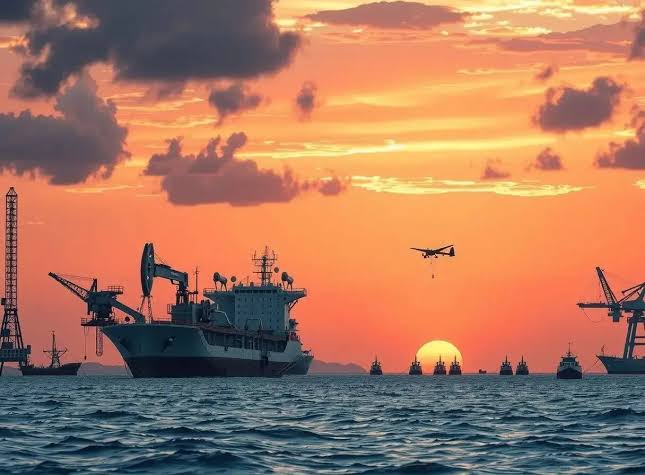
NEW DELHI: The International Energy Agency (IEA) has warned that disruptions to oil and natural gas shipments through the Strait of Hormuz have triggered the largest energy supply shock in history, with the crisis expected to have lasting consequences for global energy markets, international trade and government energy policies.
In its World Energy Outlook 2026, released on November 19, the IEA said the disruption to energy flows through the strategic waterway had resulted in cumulative losses of 2.8 billion barrels of oil and 60 billion cubic metres of natural gas supplies from the Gulf by November. The agency said the impact of the crisis was continuing to affect global energy markets, despite the resilience shown by producers, consumers and international supply chains.
The Strait of Hormuz, located between Iran and Oman, is one of the world's most important energy transit routes, connecting the Persian Gulf with the Gulf of Oman and the Arabian Sea. Before the crisis, approximately 20 million barrels of oil and petroleum products passed through the strait every day, accounting for around one-quarter of global seaborne oil trade. The waterway is also a critical route for liquefied natural gas (LNG) exports, particularly from Qatar and the United Arab Emirates.
The disruption has exposed the vulnerability of international energy supplies to geopolitical tensions and interruptions along critical maritime routes. At the peak of the crisis, global oil supply fell by 16.1 million barrels per day compared with pre-conflict levels, while Gulf producers were forced to reduce production as shipping restrictions limited their ability to export crude oil and petroleum products.
The impact has extended beyond crude oil markets, with natural gas supplies also facing significant pressure. According to the IEA, disruptions to LNG shipments from Qatar and the UAE reduced global LNG output by around 5 per cent, or 20 billion cubic metres, year-on-year during the March-October period. Damage to regional energy infrastructure has further complicated the recovery of supplies, raising concerns over the availability of natural gas during the coming winter.
The crisis has particularly affected Asian economies, which are heavily dependent on energy imports from the Gulf. Before the disruption, around 80 per cent of the oil and nearly 90 per cent of the LNG passing through the Strait of Hormuz was destined for Asian markets. Countries such as China, India, Japan and South Korea are among the major importers exposed to disruptions along this route.
The supply shock has also raised concerns over fuel prices, transportation costs, electricity generation and industrial production. Higher energy costs can increase the operating expenses of manufacturing companies, airlines, shipping operators and logistics businesses, while also adding to inflationary pressures. Developing economies with limited financial resources and high dependence on imported fuels are particularly vulnerable to prolonged supply disruptions.
However, the IEA believes the crisis could accelerate a structural transformation in the global energy sector. Governments are increasingly looking to diversify their energy suppliers, expand domestic electricity generation and reduce dependence on imported fossil fuels. Investments in solar and wind power, nuclear energy, battery storage and electric mobility could receive greater attention as countries seek to strengthen their energy independence.
The agency has also highlighted the growing importance of electrification as a strategy for improving energy security. Wider adoption of electric vehicles, heat pumps and energy-efficient technologies could reduce dependence on oil and natural gas. According to the IEA's additional response scenario, stronger government action on electrification, energy efficiency and fuel switching could reduce global oil demand in 2035 by 4.4 million barrels per day compared with its current-policy scenario.
The possibility of developing alternative export routes is also gaining attention among Gulf producers. Saudi Arabia and the UAE have existing pipeline infrastructure that can transport some oil without passing through the Strait of Hormuz. The IEA estimates that around seven million barrels per day of additional pipeline capacity could be developed through projects under construction or consideration, requiring investments of approximately $40 billion. However, the agency cautioned that alternative routes would not completely eliminate the region's dependence on the strategic waterway.
The IEA has emphasised that restoring confidence in international energy supply chains will require greater diversification, stronger infrastructure and improved cooperation between energy-producing and importing countries. It also warned that geopolitical instability, cyberattacks and climate-related risks are adding further pressure to an already vulnerable global energy system.
The developments suggest that the consequences of the Hormuz crisis could extend well beyond immediate oil price movements. Even if shipping conditions improve, governments may continue to prioritise energy diversification, domestic production and alternative technologies to protect their economies against future disruptions.