
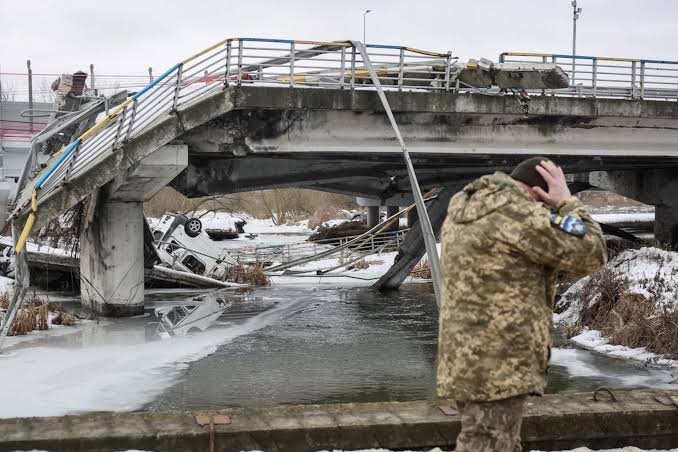
NEW DELHI: The prolonged Russia-Ukraine war is forcing European governments to reassess their security priorities, military preparedness and dependence on the United States, as uncertainty over the conflict's outcome raises concerns about the continent's long-term stability. With diplomatic efforts continuing alongside intensified military activity, European leaders are increasingly focusing on strengthening defence capabilities and developing security arrangements that can withstand future threats.
Recent developments have brought the question of Ukraine's security guarantees back to the centre of international diplomacy. US President Donald Trump's special envoy Jared Kushner has indicated that Washington could consider providing Ukraine with security guarantees modelled on NATO's Article 5 collective defence provision. The proposal emerged during discussions with European leaders in Berlin, raising expectations of a possible framework for a negotiated settlement. However, no formal commitment has been announced by the US administration.
The proposal has also exposed differences between Moscow and Western governments over Ukraine's future relationship with NATO. Russian Deputy Foreign Minister Sergei Ryabkov has rejected the possibility of NATO-style security guarantees, describing any arrangement resembling alliance membership for Kyiv as unacceptable. Moscow continues to insist that Ukraine must not join NATO, making the issue a major obstacle in negotiations.
Ukrainian President Volodymyr Zelensky has also called for greater clarity over the proposed guarantees, arguing that verbal assurances would not be sufficient to protect the country against future aggression. He has said that Ukraine needs legally defined commitments that would remain effective for decades rather than being dependent on the political priorities of individual US administrations. Kyiv continues to regard full NATO membership as its preferred long-term security arrangement.
For European countries, the conflict has increasingly become a test of their ability to defend themselves against conventional and emerging security threats. NATO has strengthened its military presence along its eastern flank, expanded defence preparedness and encouraged members to increase military investment. The alliance has also highlighted the growing risks posed by cyberattacks, sabotage, disinformation and threats to critical infrastructure. <Cite refs={["turn269793search0"]}/>
The European Union is similarly accelerating efforts to strengthen its defence capabilities. European leaders have called for greater investment in military infrastructure, improved coordination among member states and reduced dependence on external suppliers for critical defence equipment. The EU has also emphasised the need to strengthen protection along its eastern borders and improve its ability to respond to drone-related threats and hybrid attacks.
One of the major challenges facing Europe is maintaining a unified security policy while balancing different national priorities. Countries bordering Russia are particularly concerned about the possibility of further military escalation, while other European governments are weighing the economic implications of increased defence expenditure. The question of how much responsibility Europe should assume for its own security has also gained importance amid uncertainty over the future level of American military involvement.
The war has also accelerated changes in Europe's defence industry. Governments are increasing spending on ammunition, air defence systems, drones, missile technology and military logistics. Greater cooperation in defence production is becoming a priority as European countries seek to address shortages and improve their ability to respond to prolonged security crises.
The future of Ukraine is therefore closely linked to the wider security architecture of Europe. Any eventual peace settlement will need to address not only territorial and political questions but also the mechanisms required to prevent renewed military confrontation. European governments are likely to remain central to these discussions, given the direct implications of the conflict for the continent's borders, defence arrangements and economic stability.
As diplomatic negotiations continue, Europe faces a critical strategic question: whether it can develop a stronger and more coordinated security framework while maintaining its transatlantic partnership with the United States. The outcome of the Russia-Ukraine conflict could shape European defence policy and international relations for decades.